the complete, self-contained verification package codexproof ships - the signed node bundle plus the certificates, anchors line-up, and revocation material a stranger needs to verify it offline, with nothing else to fetch.
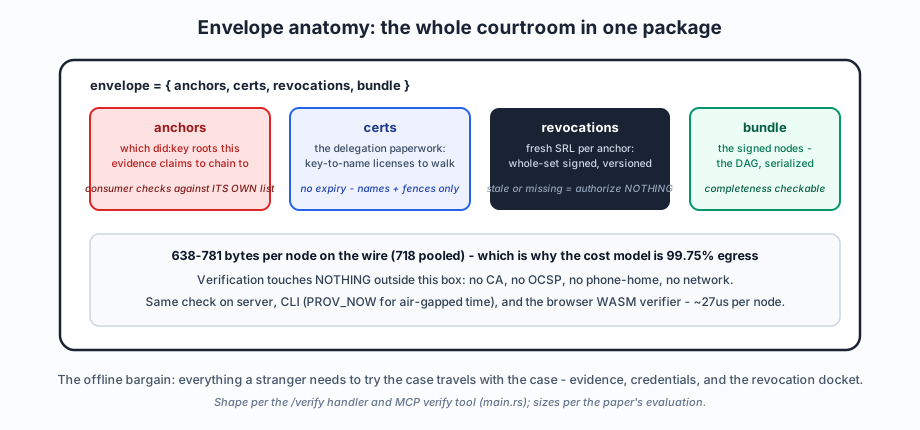
The envelope opened: four compartments, seven hundred bytes, zero phone-home.
Hand-authored SVG for this glossary, 2026. Shape per the /verify handler; sizes per the paper's evaluation.
Etymology and backstory
envelope is old protocol vocabulary (SOAP envelopes, JOSE's signing envelopes, SMTP's envelope-versus-headers distinction) for "the wrapper that carries everything the handler needs." The codexproof twist is completeness as a design goal: verification must not require phoning anyone, so the envelope carries its own trust context - certs to walk, revocation list to check, bundle to hash.
Ecosystem
JOSE/COSE signing structures, C2PA manifests, in-toto link metadata bundles, Sigstore bundles - the industry keeps reinventing "signed thing plus its verification context" because offline verifiability keeps being wanted.
In codexproof
the envelope is { anchors, certs, revocations, bundle } - the /verify endpoint and the MCP verify tool take exactly this shape (main.rs, the Envelope deserialization at the verify handler). Measured size: 638 to 781 bytes per node, 718 pooled - the number that makes the cost model 99.75 percent egress.