the academic-then-industrial framework for securing software supply chains by having every step of a pipeline sign metadata about what it did - a layout declares who may do which step, and link attestations prove each step happened as declared.
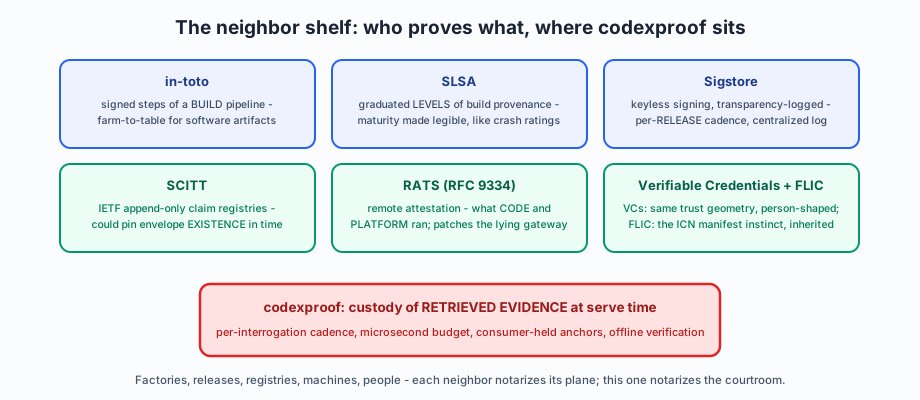
The shelf: in-toto notarizes the factory; the red box below notarizes the courtroom.
Etymology and backstory
Latin for "as a whole" - the name is the thesis: secure the WHOLE chain, not one link. Developed at NYU by Santiago Torres-Arias and Justin Cappos's group, published at USENIX Security 2019, now a CNCF project whose attestation format underpins much of the modern supply-chain stack.
Ecosystem
the metadata layer inside SLSA provenance, GitHub artifact attestations, and Sigstore-signed builds; the reference design every software-provenance conversation starts from.
In codexproof
cited as the adjacent tradition - in-toto proves how software artifacts were BUILT; codexproof proves how agent evidence was RETRIEVED and served. Same signed-metadata instinct, different plane: build pipelines are episodic and human-paced; interrogation paths are per-request and microsecond-paced, which is why JIT capture and wire-speed verification are the codexproof-shaped problems.