the W3C's 2013 standard vocabulary for provenance - entities, activities, and agents, connected by typed relations like wasGeneratedBy, used, wasDerivedFrom, and wasAttributedTo - a grammar for saying where things came from.
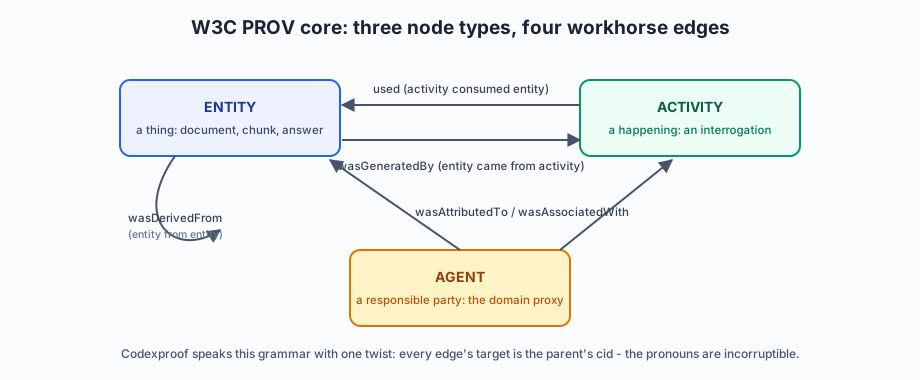
Entity, activity, agent - and the four workhorse edges between them.
Etymology and backstory
provenance is an art-world word (French provenir, to originate) - the documented custody history that makes a painting sellable. The e-science community of the 2000s (workflow systems like Taverna and Kepler, the Open Provenance Model workshops) needed the same custody story for computational results, and the W3C PROV working group distilled it into PROV-DM in 2013: a small core model (Entity, Activity, Agent) with a dozen typed edges, plus serializations.
Ecosystem
scientific workflow systems, data-governance tooling, museum and library metadata, and a long academic literature on provenance capture and querying (the paper's traces-survey citation). PROV is the lingua franca; most systems dialect it.
In codexproof
the paper's typed links ARE PROV relations - but with one structural twist that is the whole contribution: the 32-byte target of every typed link is the cid of its parent node. In standard PROV, links point at identifiers that some database resolves; in codexproof, links point at digests that the bytes themselves must satisfy. Same grammar, incorruptible pronouns.