codexproof's revocation mechanism - the anchor signs the ENTIRE sorted set of revoked certificate identifiers as one object, stamped with a freshness window and a monotone version, and verifiers refuse to authorize anything without a fresh one.
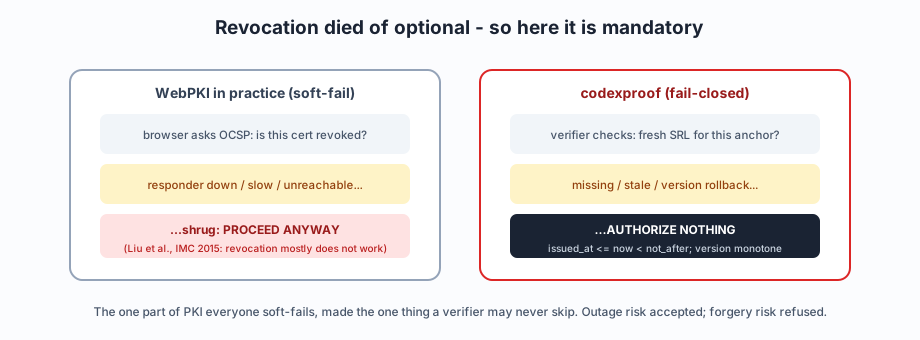
The mandatory-fresh regime, side by side with the ancestor that died of optional.
Etymology and backstory
the CRL (certificate revocation list) is the 1980s X.509 original; its web history is a cautionary tale (next entry). The SRL keeps the list shape but changes the failure semantics: the list is whole-set-signed (no partial or delta ambiguity), windowed (issued_at through not_after), and versioned (the anti-rollback knob, so a stateful verifier pins the highest version seen and an attacker cannot re-serve an older, still-unexpired list).
Ecosystem
CRLs and OCSP in WebPKI, CRLite and CRLSets in browsers (compressed revocation), key transparency logs - everyone is still arguing about revocation, which is the tell that it is the hard part.
In codexproof
revoke.rs, lines 40 to 45 (version, issued_at, not_after) and line 70 onward (the signed byte layout). The doctrine line at the top of the file: a missing or stale list makes verification FAIL, not silently pass - "the inversion of the C2PA gap."