the Coalition for Content Provenance and Authenticity - the industry standard (Adobe, Microsoft, camera makers) for cryptographically signed manifests attached to media files, recording capture and edit history.
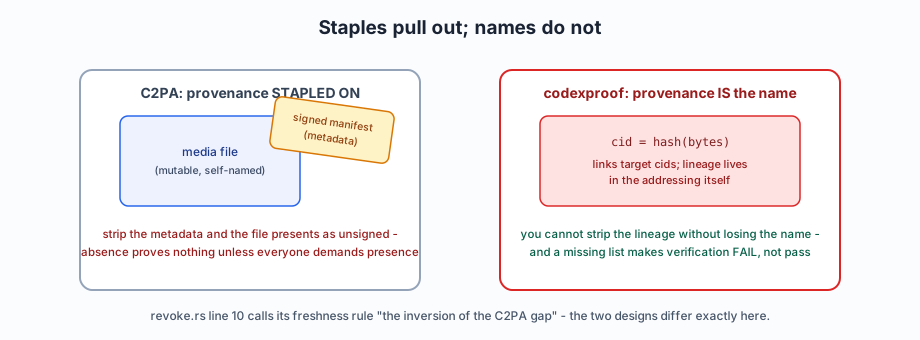
Stapled-on versus name-itself: the exact seam where the two designs part.
Etymology and backstory
born from Adobe's Content Authenticity Initiative and Project Origin (Microsoft, BBC) around 2019-2021, aimed at deepfake-era media trust: cameras sign at capture, editors append signed actions, viewers inspect the manifest chain. Its known weakness, documented in the security literature the paper cites: manifests are REMOVABLE - strip the metadata and the file simply presents as unsigned, so absence proves nothing unless the whole ecosystem demands presence.
Ecosystem
shipping in Adobe tools, some Leica and Nikon cameras, and platform pilots; the reference point for content-provenance conversations the way X.509 is for identity.
In codexproof
the named gap the revocation doctrine inverts (revoke.rs line 10: verification FAILS rather than silently passing - "the inversion of the C2PA gap"). The deeper contrast: C2PA travels as detachable metadata on mutable files; codexproof makes provenance the addressing scheme itself - you cannot strip the lineage without losing the name, because the lineage IS the name.
---