codexproof's keyless coordination service - one plain HTTP router that fans interrogations across the operator's stores, assembles unsigned provenance templates, dispatches them to per-domain signing proxies, and returns sealed envelopes; routes, but cannot mint.
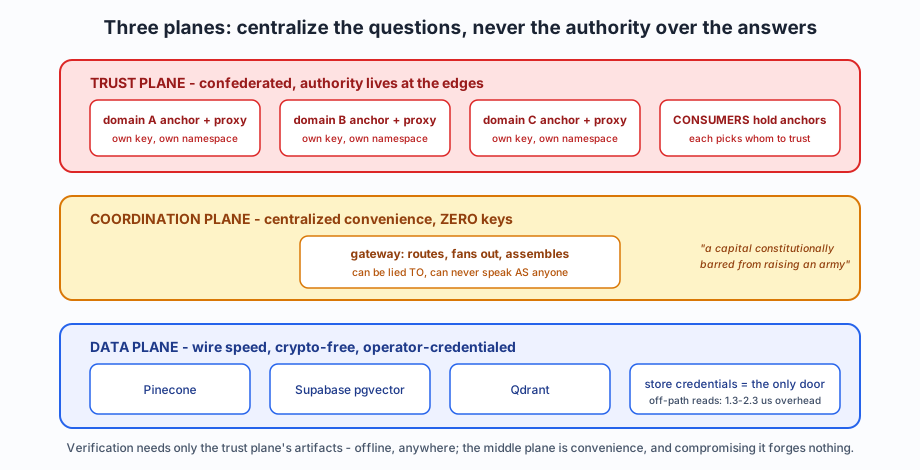
The middle band: convenience centralized, keys absent by constitution.
Hand-authored SVG for this glossary, 2026. Topology per the paper's design section and QA.md Q11.
Etymology and backstory
gateway is ancient networking vocabulary (the original Internet routers were called gateways) for the box that stands between worlds. The codexproof twist is what the gateway deliberately LACKS: keys. The centralize-the-questions-never-the-authority design (Q11's three planes) puts convenience at the center and truth at the edges - the capital constitutionally barred from raising an army.
Ecosystem
API gateways (Kong, Envoy) as the industry's coordination-without- authority tier; certificate authorities as the counterexample codexproof avoids (coordination WITH authority, and look what audit machinery that required).
In codexproof
prov-store's axum router (main.rs lines 75-85): /prov, /prov/{cid}, /verify, /interrogate, /mcp, /.well-known/agent-card.json. Gateway::from_env (gateway.rs line 126) reads PROV_PROXIES (namespace to proxy URL), a strict 50ms-default proxy timeout, and the mode flag. Binds loopback by default; a deployment must explicitly choose exposure - at which point its perimeter is an ops obligation (rate limits: the mathlimit seam, Q16).