sealing provenance at the moment evidence is SERVED rather than when it is stored - the gateway builds templates from live query results and the proxies sign them on the spot, so the seal cost rides the interrogation path.
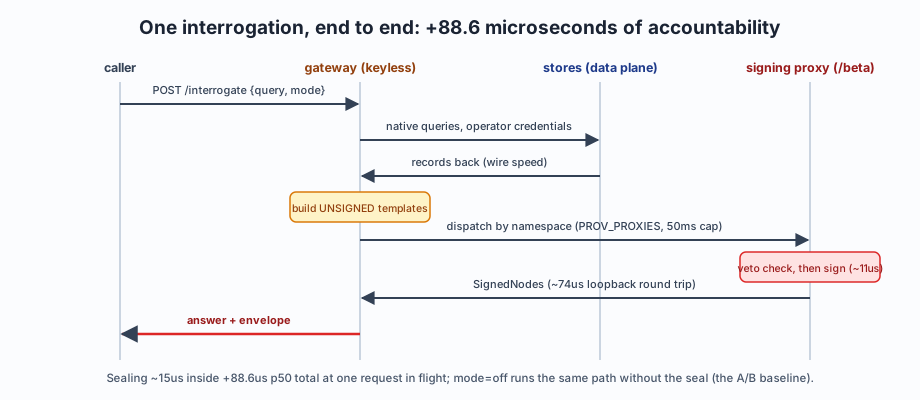
The full capture path with its budget: 88.6 microseconds of accountability at p50.
Etymology and backstory
just-in-time is manufacturing vocabulary (Toyota) that software borrowed for compilers and now for capture policy. The alternative - seal everything at ingest - pays crypto and storage for oceans of chunks that may never be cited. JIT inverts the bet: pay ~88.6us p50 per interrogation, seal only what is actually consumed. The paper's two tellings (Q10): the security telling (evidence sealed against its consumption context) and the operations telling (cost scales with use, not with corpus).
Ecosystem
JIT compilation, lazy materialization in databases, on-demand manifest generation - the general pattern of deferring expensive work until demand proves it worthwhile.
In codexproof
the default mode (empty mode string parses to Jit, gateway.rs lines 375-382), with off as the A/B baseline and a caller-side per-request opt-out (req.mode, line 201 - the Q14 discovery). The measured budget: +88.6us p50 end to end, ~15us sealing inside it, fallback ratios up to 148,737x for the pathological cold paths the paper reports honestly.