the 50th percentile (median - half of requests are faster) and the 99th (the tail - one in a hundred is slower), the two numbers that together describe how a system feels versus how it fails.
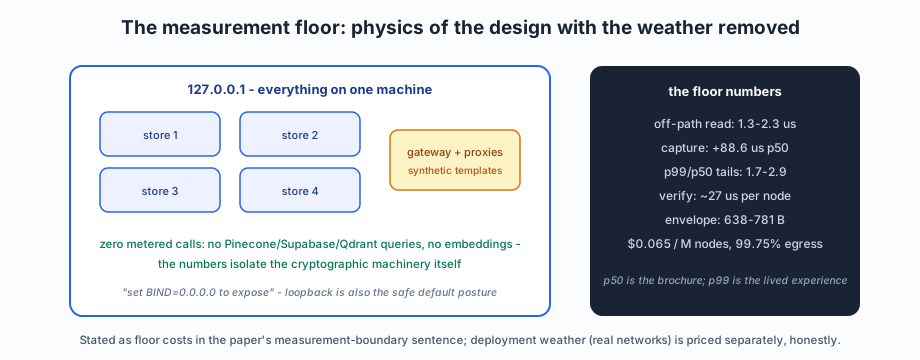
The floor numbers with their tails - the brochure and the lived experience.
Etymology and backstory
percentile reporting became systems-engineering orthodoxy when scale revealed that averages lie - a beautiful mean can hide a catastrophic tail, and at fan-out (one user action touching a hundred services) the tail becomes the common case. Dean and Barroso's "The Tail at Scale" (CACM 2013) is the canonical statement.
Ecosystem
every SLO ever written; monitoring stacks report p50/p95/p99 as reflex; capacity planning lives in the tail.
In codexproof
the paper reports both - capture +88.6us p50 with p99-to-p50 ratios of 1.7 to 2.9 documented in the tail-latency paragraph (an Aug-strata delta, item 11 on the rehearsal list). A tight tail ratio at one request in flight is the claim that the sealing path has no lurking bimodality at the measured operating point.