locating and naming data by WHAT it is (its digest) instead of WHERE it lives (a host and a path), which makes the data verifiable no matter who serves it.
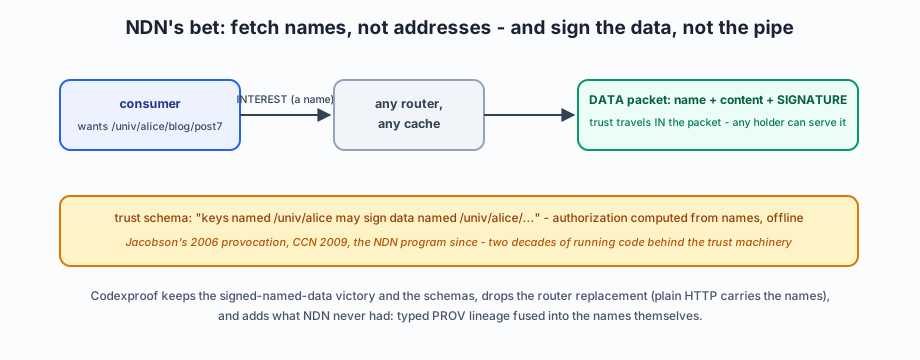
The fetch-by-name bet, drawn in NDN's packets: the receiver verifies, so the server stops mattering.
Etymology and backstory
the contrast term is location addressing - a URL names a server and a path, and you trust whatever comes back. Content addressing inverts the trust: the name commits to the bytes, so the server becomes irrelevant to truth. The idea threads from Merkle trees through the content-addressable storage systems of the 1990s and 2000s (Venti at Bell Labs, the EMC Centera appliance), then git, then IPFS and the decentralized-web movement.
Ecosystem
any cache, mirror, or CDN can serve content-addressed data without being trusted, because the receiver re-hashes and compares. That property is why cloning git from any mirror is safe and why package managers pin dependencies by digest.
In codexproof
GET /prov/{cid} is content addressing mapped onto plain HTTP - the path IS the digest, any host can serve it, and the doc comment on that route says the receiver verifies it itself. This is the NDN insight worn as a REST costume, and it is lock 2 of the federation story: free riders can propagate evidence but never mint it.