a portable binary instruction format that runs at near-native speed inside browsers and beyond - the technology that lets codexproof's verifier run identically on a server, a laptop, and a web page.
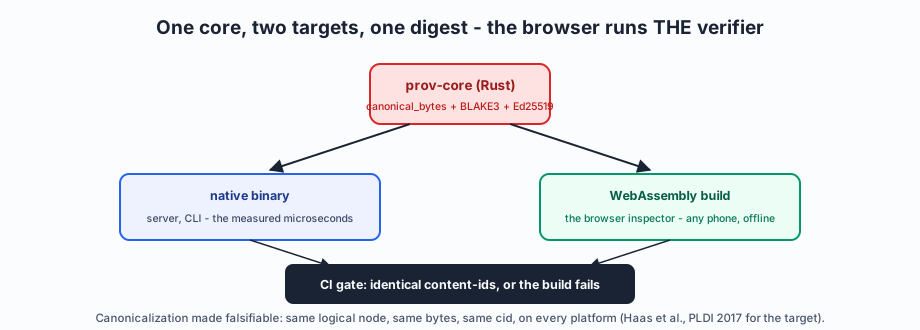
One Rust core, two targets, a CI gate that fails on any digest disagreement.
Etymology and backstory
WebAssembly shipped in 2017 as the four-browser successor to asm.js - a compilation target so JavaScript would stop being one. Haas et al.'s PLDI 2017 paper describes the design: sandboxed, typed, formally specified. It escaped the browser via WASI and standalone runtimes, becoming a universal plugin and sandbox format.
Ecosystem
browser apps (Figma), plugin systems (Envoy filters), serverless edges (Cloudflare Workers), and - the codexproof-relevant lane - cryptographic verifiers compiled once and trusted everywhere Rust compiles.
In codexproof
the same prov-core crate compiles natively and to WASM, and CI checks both produce IDENTICAL content-ids - the canonicalization discipline made falsifiable (the browser verifier gloss, edit one of five). The public inspector on codexproof.com is this WASM build - the phone-browser demo that verifies an envelope live in the Tempe hallway.